

Purchasing a software project
Do you have an idea that could be realized with custom software? Do you need an app or a web service for a new business venture, or do you want to digitize an existing business?
Commissioning a software project is an important process in which an idea is developed further and a joint decision is made on its implementation. We want to support our clients right from the very first point of contact, so that the value delivered by the software project in relation to the price quoted is clear from the outset.
Open communication during the procurement phase and throughout the project helps us achieve our shared goal: successful software that delivers value. It is important to us that our clients are fully aware at all times of the project scope, the basis for pricing, and the nature of the end product we will deliver. We strive to create a relaxed yet professional atmosphere, where expertise, collaboration and trust form the foundation of the software development project.
The initial stages of purchasing a software project
1. Get in touch and tell us about your idea
Close collaboration is essential for a good tender and a successful start to a software project. Our collaboration can begin either with a comprehensive request for a tender or with the presentation of a preliminary idea. We’d be happy to help you develop your idea further!
A comprehensive request for quotation may include, for example, specifications for the end product, technical implementation methods and acceptance criteria. However, we will go through these matters together if necessary.
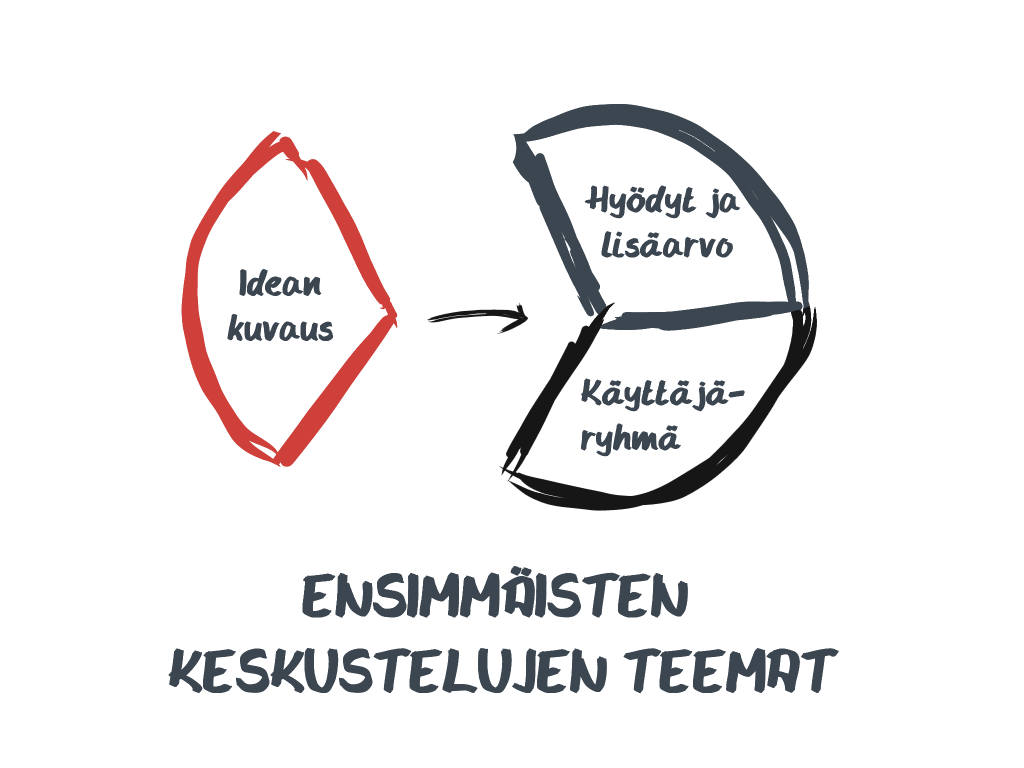
- What problem does the software solve?
- Who belongs to these user groups, and what benefits does the software offer them?
- How does the software to be developed from this idea fit in with my business?
If you can’t find the right answers to all your questions straight away, don’t worry! We’re easy to get in touch with; we’re happy to help and will ask the right questions. We’ll explain and guide you on what you need to consider, prepare and clarify, so that your request for quotation contains sufficient background information to calculate the total implementation costs. We’ll brainstorm ideas together and suggest improvements where necessary.
2. We get to know the customer
We want to understand what our clients expect from a software project and what sort of solution best meets their needs. As well as having an idea, the client must also have a clear understanding of their own situation and business operations, so that we can fully grasp the relevant information. The fact that we are genuinely interested in and understand the client’s business helps us to propose solutions that create the greatest added value for both the client and the end users.
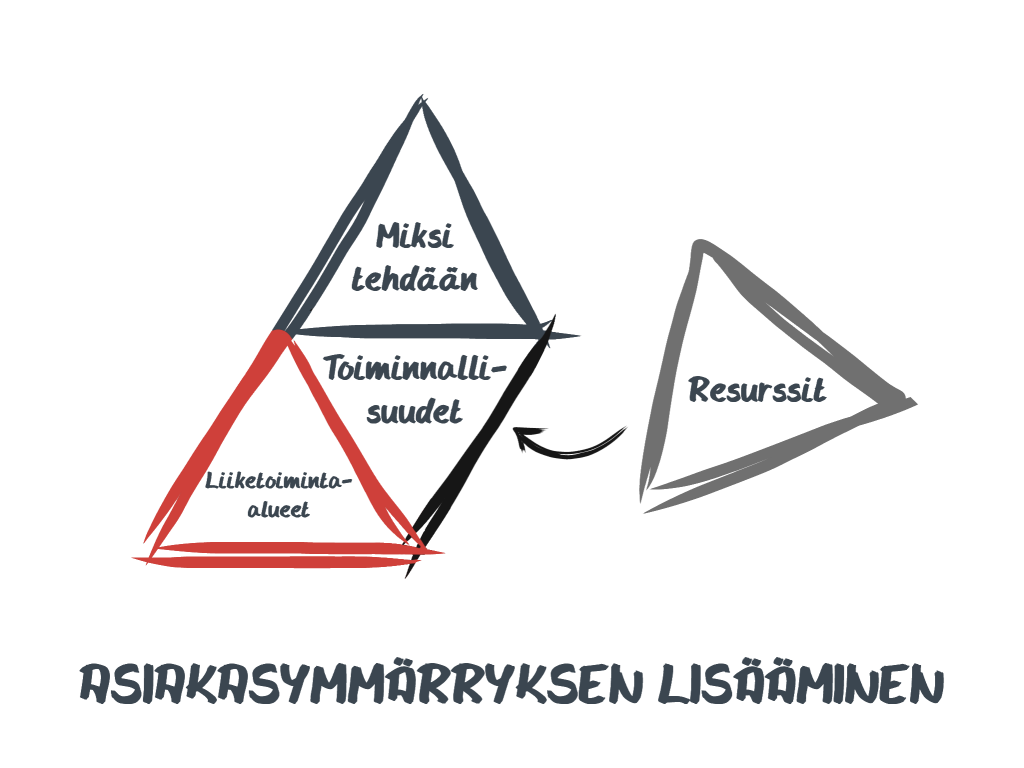
- Why is software based on this idea being developed?
- What features should the software include? What is the order of priority for these features?
- What are the business areas, the operating environment, and who are the project participants and stakeholders?
- What are the resources, timetable and budget for the software project?
In joint workshops, the initial idea is developed into a more concrete solution model that can serve as the basis for a request for proposals. This concreteness facilitates the purchasing decision, clarifies the contract-making process and helps developers plan their work. If the project is very large-scale, the whole project can, if necessary, be reviewed using service design. When the objective is clear, the final product will be more than adequately suited to the needs of the client and service users.
The budget and timetable may impose even strict limitations on the scope of the project. If the requirements for functionality conflict with other resources, this is the stage at which you can consider, for example, which non-critical requirements should be left out and implemented later. Sometimes it is even possible to start with an MVP (Minimum Viable Product) and refine the plans based on user testing, for example.
3. The right offer for the right need
A request for quotation that contains sufficient background information helps us to prepare a quotation in which the requirements for the final product are set out clearly, with sound reasoning and in an easily readable format. We consider it important that the content of the project to be carried out on the basis of the quotation can be tailored to the client’s needs. We also ensure that the project does not involve any technical solutions that would hinder maintenance or further development – in other words, so-called ‘technical debt’. This makes it easy for the client to assess the proposal in relation to their own objectives and make a purchasing decision.
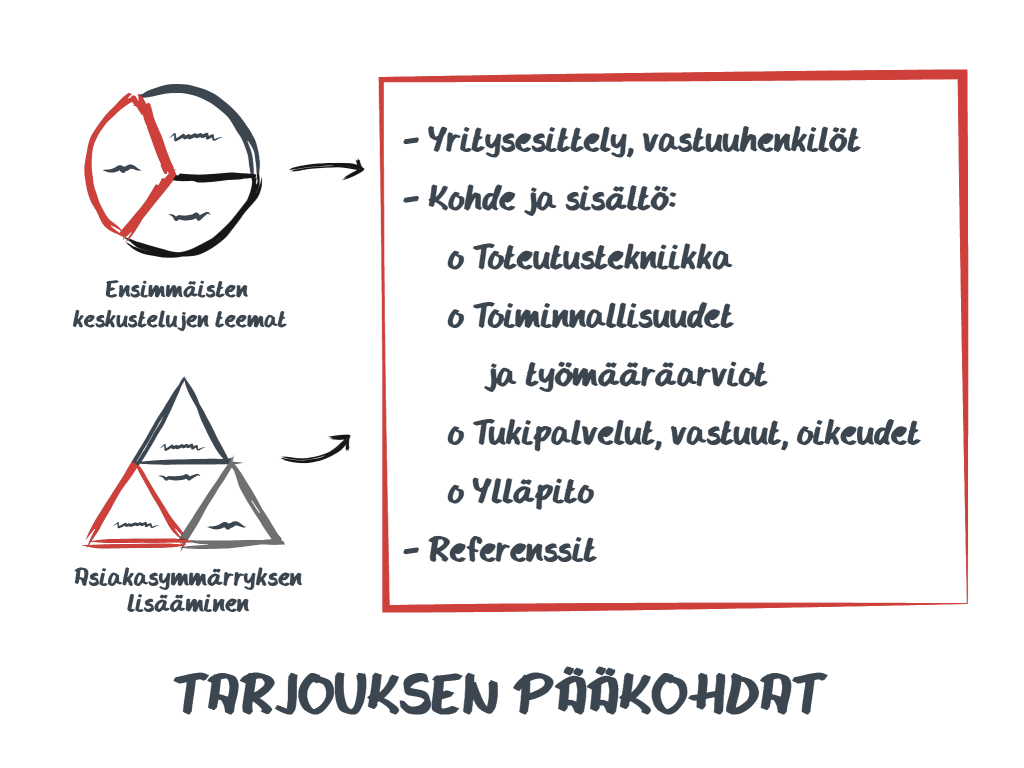
A great deal of emphasis may be placed on the budget and timetable, although – particularly in custom projects – it is advisable to leave room in the quotation for changes identified during the course of the project. Once the key value-adding features are identified, the software can be developed in an agile manner within the available budget. In this way, usability and a business model that delivers added value to customers remain the top priorities throughout the project.
Following the establishment of a good working relationship, mutual trust and the acceptance of the proposal, it is time to draw up a contract and launch the software project. Throughout the project, interaction and discussion continue to play a major role, as the practical work may be refined and iterated as the project progresses. And if, for example, the proposal does not specify a fixed price, the methods of implementation and the scope of work will be negotiated, and costs will be agreed with the client as the work progresses.
The best software is created collaboratively
Now you know how we at Hurja can launch a software project that’s tailored to your business and delivers added value. We also look forward to you challenging us to deliver software that meets your requirements and to you being actively involved in the project’s implementation. With us, clients get to be part of the software development process and can ask detailed questions about the project, working methods and teams at any time. An expert software house will certainly be able to answer them.
So please do get in touch, even if your idea is still a diamond in the rough! We promise you a genuinely relaxed and friendly welcome and a customer-focused experience. We develop software tailored to our clients’ needs and take an agile approach to developing even large-scale software projects, while constantly listening to our clients. Our team of skilled experts is keen to turn your idea into the best possible end product.
Shall we get started?
"*" indicates required fields

You might also like these articles

6 winning use cases for AI – how to find where it really pays off
Read more

AI for businesses – a practical guide to getting started
Read more

Digitalization of production management and reporting – efficiency and growth
Read more

Are you cutting corners at the expense of your business? Cutting corners in software development creates technical debt
Read more
 Hurja Solutions Oy has been awarded Great Place to Work® certification