

Software integration – why integrate and how to do it successfully?
Integration means ensuring that different software programs, systems and services work together seamlessly. Without integration, data remains trapped in silos, manual work increases and efficiency suffers.
Integration is not merely an IT project; if an integration project is treated as such, it will fail. Integration is the backbone of a company’s operations, enabling systems, data and processes to work together seamlessly. Whether it’s about managing customer data, automation or improving efficiency, integration is an essential step towards a more competitive business.
A typical starting point for an integration project is that a company has several different systems of varying ages, and these systems are used by different business units. It is rare to find a situation where a company is able to manage all its operations within a single system. This situation leads to extra manual work, cumbersome processes, inaccurate data – you name it.
When data is spread across multiple systems, it is also difficult to gain an overall picture of customer data. However, one of the most important factors in a company’s competitiveness is undoubtedly the customer experience. Inefficiency and a lack of innovation, on the other hand, are sure-fire ways for companies to fail.
Integration is therefore not simply a matter of connecting software systems to one another, but also of automating business processes and developing new business activities.
- What does integration mean?
- Integration can be examined at different levels
- In today’s society, up-to-date information plays a key role
- The benefits of software integration for businesses
- The practical benefits of integration: PetterSteel and the development of the ERP system
- Risks associated with the integration project
- What software can and should be integrated?
- Interfaces (API, Application Programming Interface) form the basis of integrations
- Indicative price example for a simple integration
- We’ll help you succeed in your integration project
What does integration mean?
In software development, integration refers to the process of combining different software components, systems or services so that they work together seamlessly. The aim of integration is to enable data transfer and interoperability between different parts so that they can work together as a unified whole.
A well-designed integration connects systems in such a way that they not only work together, but also support business objectives. Integration ensures that data flows smoothly and in real time between different systems. It eliminates unnecessary steps, minimizes errors and makes business operations more agile.
In practice, integration can mean, for example, linking an online shop to warehouse management, integrating a financial management system with an ERP system, or synchronizing customer data between a CRM and marketing automation. This makes integration a critical part of a company’s digitalization.
Integration can be examined at different levels
- System integration: The process of connecting different information systems, applications or services so that they can exchange data and work together. This may include, for example, the integration of a company’s internal systems or those of external partners.
- Application integration: The process of combining components or modules within a single application so that they work seamlessly together. This may involve, for example, integrating components written in different programming languages.
- Data integration: The process of combining data from various sources, such as databases, files or interfaces, so that the data is consistent and easily accessible across different systems and applications.
There are various technologies available for implementing integration, such as:
- They enable communication between different systems in a standardized manner.
- Integration platforms (e.g. ESB, iPaaS): Provide tools and services for implementing and managing integration.
- Data transfer formats (e.g. XML, JSON): Enable the structured transfer of data between systems.
Successful software integration improves the interoperability of systems, reduces manual work, speeds up the flow of information and enables the automation of business processes. It is an important part of modern application development, where systems are increasingly interacting with one another.
System integration refers to the process of connecting different information systems, software, or services so that they can work seamlessly together. The goal is to enable data transfer and collaboration between different systems, allowing them to form a unified whole.
Through integration, data can flow automatically between systems, which reduces manual work, improves process efficiency, and increases the usability of data in business operations.
For example, a company’s ERP (Enterprise Resource Planning), CRM (Customer Relationship Management), and billing system may be separate systems, but through integration, they can exchange information in real time and function as a single entity.
This allows, for instance, customer data to be updated automatically between sales and billing.
Key benefits of system integration:
Automation: Processes speed up, and manual data entry is reduced.
Real-time data: Decision-making improves when information is always up to date and readily available.
Enhanced processes: Work tasks become more streamlined and efficient when different systems work together.
Error reduction: When data flows automatically from one system to another, manual errors are reduced.
System integration can involve a company’s internal systems, but also the external systems of partners or suppliers. This is typically achieved using APIs (such as REST API), which enable the secure and efficient sharing of data between systems.
Application integration refers to the process of connecting different software applications or their components so that they can work seamlessly together.
The goal is to enable data transfer and collaboration between different applications, allowing them to complement each other’s functions and deliver a better user experience or more efficient process management.
Application integration is particularly important when a company has multiple separate applications supporting various business processes. Without integration, application data remains in isolated silos, which causes manual work, errors, and inefficiency.
Examples of application integration:
CRM and marketing automation: Customer data flows directly from the marketing automation system to the customer relationship management (CRM) system, helping the company provide personalized customer experiences.
E-commerce and inventory management: Integrating e-commerce software with an inventory management system enables real-time visibility of stock levels and fast order processing.
Email client and project management tool: For example, integrating an email client with a project management system can facilitate task management and communication between teams.
Key benefits of application integration:
Data transfer between applications: Integration allows information to move automatically between applications without manual data entry.
Enhanced processes: Application integration reduces manual work and automates data processing, which speeds up workflows.
Better user experience: When applications work together, users receive a more unified and efficient experience, improving the smoothness of work.
Unified data: Thanks to integration, information is up to date and accessible across all applications, which facilitates decision-making and reduces data errors.
Application integration can be implemented using various technologies, such as APIs (e.g., REST, GraphQL) or integration platforms that connect and manage the flow of data between different applications.
Data integration refers to the process of combining different data sources, such as databases, files, or applications, so that the information is brought together and can be used as a unified, easily manageable whole.
The goal of data integration is to combine data from different sources so that it is accurate, consistent, and readily available for purposes such as reporting, analytics, or supporting business decisions.
Key elements of data integration:
Combining data sources: Information from various sources, such as databases, files, applications, or cloud services, is combined into a single data repository.
Data harmonization: Data from different sources is made compatible. For example, data formats and structures are converted to be compatible so that they can be processed uniformly.
Timely data transfer: Through data integration, information is updated in real time or at regular intervals between different systems, allowing up-to-date data to be utilized in decision-making.
Examples of data integration:
Combining customer data: A company may have customer data in a CRM system, an online store, and a marketing automation system. Data integration allows information from all channels to be combined, providing a comprehensive view of customer behavior and needs.
Integrating ERP and financial systems: A company’s enterprise resource planning (ERP) system can be integrated with financial management software, allowing financial data to update automatically between the different systems.
Reporting systems: Data generated by different systems and applications can be combined into a single reporting dashboard, giving the company a clear overall picture of its business situation.
Benefits of data integration:
Unified data: Information from different sources is harmonized and combined into a single entity, ensuring that all users see the same up-to-date data.
Better analytics and decision-making: When all necessary information is available in one place, decision-making is faster and based on more accurate data.
Automation and efficiency: Data integration eliminates the need for manual data entry and consolidation, which saves time and resources.
Error reduction: When data does not need to be manually entered into multiple different systems, manual errors and overlaps are reduced.
Data integration is an essential part of business digitalization because it enables the efficient utilization of data across various business processes, such as improving the customer experience, operational efficiency, and analytics.
In today’s society, up-to-date information plays a key role
The exchange of data between the systems operating in the background plays a key role in day-to-day operations, not only in ensuring the smooth running of processes but also in enabling the company’s development. In today’s digitalized society, data plays an ever-increasing role. If a company’s data is spread across several different software programs and systems, data silos are created, making it more difficult to process and utilize the information.
Digitalization requires continuous innovation in terms of both working methods and skills development. A competitive advantage can be created through software development, for example by efficiently digitizing a company’s business model, operations or day-to-day tasks, or by creating an exceptional customer experience.
Growth, profitability and competitiveness are key business objectives, and achieving them requires companies to demonstrate unprecedented speed and agility in the face of digitalization. The primary purpose of integrations is to promote digitalization within companies and to create both competitiveness and a competitive advantage.
The benefits of software integration for businesses
In a typical situation where the data a company needs is stored across multiple software applications and systems, software integrations can be used to transfer data from one system to another or make it more easily accessible to users. It also makes it easier to utilize the data for business analysis.
Modern integration helps companies move away from silos towards seamless collaboration between different departments. Integration enables data to be utilized in real time, which in turn improves decision-making and customer service.
For example, integrating an ERP system with production and financial management systems is a common way of harnessing the benefits of integration. This enables the real-time transfer of production data to warehouse management and the finance department, allowing the company to optimize materials procurement, stock turnover and cost accounting.
A well-implemented ERP integration links data and processes across different departments, speeding up the supply chain and reducing errors.
Another example is the integration of an online shop with a CRM system, which automates order processing and stock management. This improves customer service by providing a real-time view of customer data and speeding up deliveries.
Automation reduces manual work and leads to fewer errors
- Integration between systems helps to save costs and reduce repetitive manual tasks.
- The number of errors is reduced as data flows automatically between different systems.
- A well-known example of automation is e-commerce integration, where data transfer is automated between online shops’ stock management and invoicing systems.
Further information to support business development
- Seamless data flow also helps, for example, to improve the customer experience and develop business operations, as information stored in different systems can be combined and utilized more freely.
- This also makes it easier to measure the success of the business, and the metrics can be used to improve both the customer experience and operating practices more easily.
The same information is available throughout the organization
It is quite common, for example, for marketing, sales, customer service and financial administration to use different systems, which means that customer data is not necessarily available to all departments.
As data is spread across numerous systems, work becomes inefficient, sharing information is difficult, and it is impossible to build an accurate overall picture of customer data. This also easily leads to errors and a deterioration in the customer experience.
- ERP integration with financial management and stock management systems brings data together in real time. This enables, for example, rapid order processing, more accurate monitoring of stock levels and the automation of cost accounting. As a result, both sales and financial management can make decisions based on consistent and up-to-date information.
- Integrating customer service with the CRM system gives customer service teams access to all key customer data, such as previous purchases and contact history. This speeds up response times and improves customer satisfaction.
- The integration of marketing and analytics systems links campaign results directly to CRM and sales systems, making it easier to measure the impact of marketing efforts on turnover and enabling more efficient optimization.
Integrating CRM with a marketing automation system makes customer data available to the sales team and enables the delivery of a better customer experience.
Greater understanding of customers
- Data that can be utilized more effectively enhances customer insight by enabling the creation of a 360-degree view of the customer journey. When information on all touchpoints – for example, with marketing content – is made available to the sales team (which channel the lead came from, responses to newsletters, which pages the person has visited, and so on), the data silo between marketing and sales is broken down.
Increased information security
- Well-implemented integration improves data security, as data does not have to be entered manually into the systems.

The practical benefits of integration: PetterSteel and the development of the ERP system
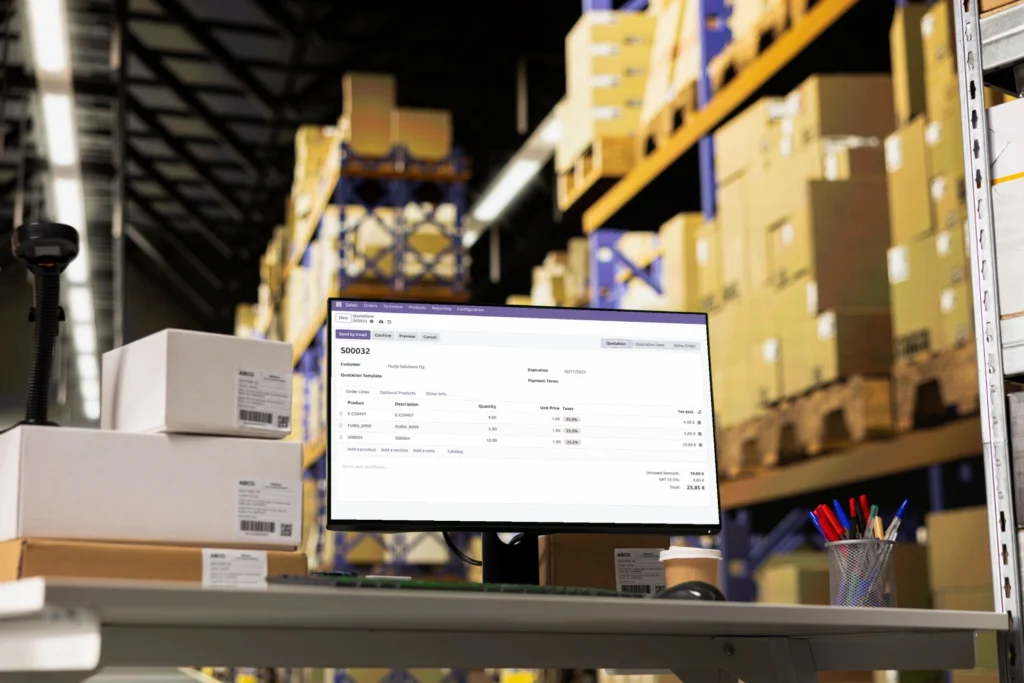
PetterSteel, a Kuopio-based pioneer in building sheet metal work, has digitalized its operations in collaboration with us by developing its ERP system. Among other things, we have developed and maintained integrations with the Procountor financial management system and the Bendex sheet metal system, which streamline the flow of information and reduce manual work.
“Our business is growing, and we have been able to manage this growth with our current financial management team. We are now developing the system further so that we can manage an even greater volume with our current resources. One of our goals, for example, is fully automated invoicing.” – Petteri Heimonen, CEO, PetterSteel Oy
The example of PetterSteel illustrates how the continuous development of an ERP system and effective integrations can streamline processes and support growth.
Risks associated with the integration project
A slapdash approach seals the fate of an integration project right from the outset. Without proper specification, planning and prioritization of the modules, functionalities and requirements to be implemented in the software, every software project is doomed to fail. Of course, even if these aspects are handled successfully, the project may still fail later on for other reasons.
In integration projects, the importance of the initial planning work is emphasised even further, as the project is implemented within an existing information technology environment, where the needs of stakeholders may differ considerably.
However, an integration project is always about reshaping business processes, so ownership of the project must lie with someone who also has an understanding of the business. The first step, therefore, is to define the business requirements, and only then can the technical specifications be drawn up.
A lack of planning is one of the biggest risks in an integration project
Integration involves many stakeholders, and if their needs are not taken into account, the project may face resistance or even fail. A well-planned integration not only resolves current challenges but also creates a flexible foundation for future needs.
The project owner must also ensure that the needs of all stakeholders are taken into account, as the risks associated with integration projects are closely linked to the number of stakeholders. As there are many stakeholders with different needs, particular attention must be paid to involving everyone in the project.
Otherwise, there is a risk of ending up with a system that does not integrate properly, fails to meet the needs of all stakeholders and even increases the amount of manual work.
What software can and should be integrated?
In most cases, the systems to be integrated are payment, invoicing, ERP or CRM interfaces. Every business has its own specific needs, but the most common integrations relate to ERP systems, CRM solutions and marketing automation. Integration enables these tools to work together, saving time and reducing errors.
For example, integrating payment systems into an online shop can improve the customer experience and speed up payment transactions.
Popular systems also often provide ready-made libraries that make integration easier. For integration to be possible, the system to be integrated must have some form of interface (e.g. REST API or XML) through which data is transferred between systems. It is also important to know, right from the planning stage, in which direction the data needs to flow (export/import/both ways).
Interfaces (API, Application Programming Interface) form the basis of integrations
Interfaces (API, Application Programming Interface) enable communication and data transfer between software programs in a standardized manner. APIs can be used to automate manual tasks, ensure that information is kept up to date across different systems, and build scalable solutions to meet business needs.
The most common types of API are REST APIs, which are a modern and lightweight solution for web services, and XML-based APIs, which are used particularly in older systems. In addition, GraphQL offers a flexible alternative for handling more complex data requests.
Integration projects make use of these ready-made interfaces or, where necessary, develop any missing interfaces to enable data to be transferred securely and reliably between systems. When carrying out integrations, it is advisable to utilize the best industry-specific systems on the market and to outsource the company’s operations where appropriate.
For example, it does not make sense for every organization to have its own software developed for time and attendance tracking or invoicing; instead, it is better to make use of off-the-shelf products and system integrations.
As our client, you don’t need to have all the necessary information right from the start, as here at Hurja we’ll also help you gather it. Of course, the more detailed the initial information you can provide, the more efficiently we can get the project off the ground. If possible, it’s worth checking in advance whether the systems to be integrated have any ready-made interfaces.
It is also worth considering just how critical and important integration is, so that it pays for itself in the future.
Over the years, we at Hurja have carried out a wide range of software integration projects:
- Website content management systems, e.g. WordPress / Drupal
- Enterprise resource planning systems, e.g. Severa
- Email marketing tools, e.g. MailChimp
- Various CRM solutions and marketing automation tools, e.g. HubSpot
- SMS gateways
- Various payment providers, e.g. Checkout/Paytrail, Nets payment interfaces (card payments)
- Authentication systems
- The Tax Administration’s systems
- Traficom’s systems
- Financial management systems, e.g. Procountor, Netvisor, Fennoa, Ropo24, Talenom
- Inventory management and invoicing systems for online shops
- Communication and collaboration platforms, e.g. Microsoft Teams
- Google APIs
- Nettix interfaces
- Data processing integrations, e.g. burning subtitles onto video footage, converting video/audio files into a different format
- Digital learning environments, e.g. Google Classroom, itslearning
- Other data sources used in our integration projects: FMI interfaces, Fingrid Datahub, Jamix, Konefutur, Betsson, TorneoPal, Tampuuri
The technologies we use include REST, GraphQL, WSDL/SOAP and SFTP.
Indicative price example for a simple integration
- Implementing integration between two systems
- Unidirectional or bidirectional integration between two systems for which documentation is available for the interfaces
- Specifications regarding what is to be transferred, where it is to be transferred to (source and destination systems) and how (CSV, XML, API, etc.)
- For example, a data warehouse or integration services could be utilized
Price from €3,000 + VAT.
We’ll help you succeed in your integration project
As we noted at the outset, integration is not merely an IT project. The success or failure of a project does not usually depend on the technology, but rather on how well the requirements are defined. The prerequisite for success is therefore that the requirements are first defined on the basis of business needs; only then can the technical specifications be drawn up.
Integration is more than just a technical solution – it is a business enabler. Hurja’s experts are on hand to help you plan and implement a successful integration project that meets your company’s needs.
Get in touch today and we’ll make sure your integration pays for itself many times over!
Shall we get started?
"*" indicates required fields



 App development