

App development – modern methods deliver a competitive edge
Artificial intelligence is also currently making application development more efficient
Developing a custom application is an effective way for businesses to respond to the challenges and opportunities presented by digitalization. Tailor-made applications can streamline internal processes, enhance the customer experience and open up new business opportunities. Applications offer businesses a significant competitive advantage and can solve a wide range of challenges – whether it’s automating internal processes or serving customers more effectively.
Nowadays, application development can also be made considerably more efficient by utilizing no-code and low-code platforms, as well as artificial intelligence technologies, which bring new dimensions to application development.
In this blog post, we’ll look at the stages involved in building an app, from conceptualization and specification right through to coding and technology selection. We’ll also highlight how modern tools, such as no-code and low-code platforms, as well as artificial intelligence, can speed up and streamline the development process, reducing manual work and potentially enabling faster time-to-market. By integrating artificial intelligence into the app development process and even into the app’s functionality itself, we can achieve solutions that are smarter, more adaptable and delivered more quickly.
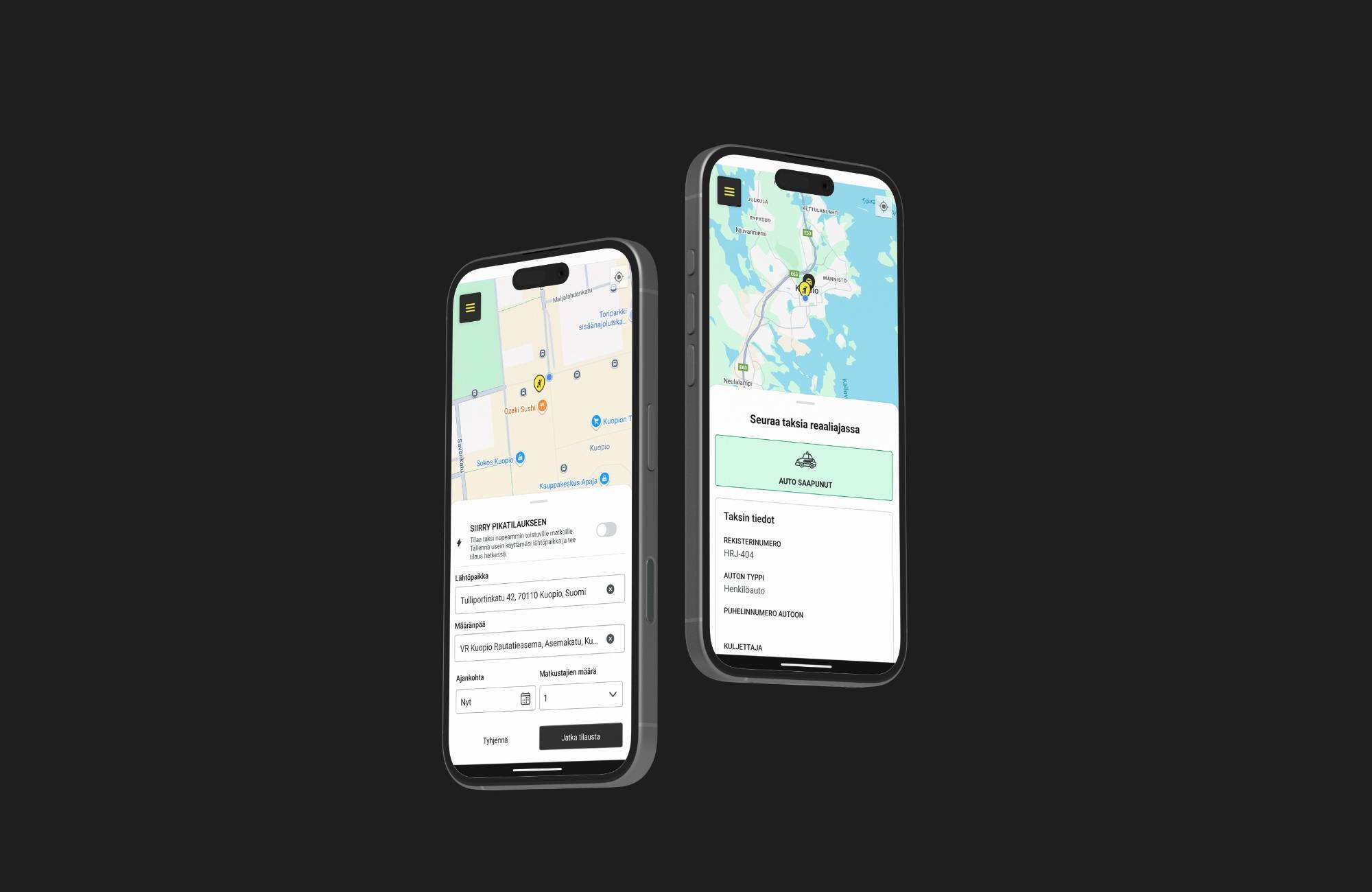
Take a look at the mobile app we developed for Taksiykkönen, which utilized artificial intelligence throughout the entire process, from design and development to launch.
- Artificial intelligence is also currently making application development more efficient
- Different application options and choosing the right one
- Case: Taksiykköset mobile app
- Building an app – step by step
- Artificial intelligence and automation make app development more efficient
- The cost of developing an app
- Developing an app works best with a reliable partner
Different application options and choosing the right one
Nowadays, apps are one of the most effective ways to reach customers and provide services digitally. Apps enable companies to create custom-built solutions that enhance the customer experience and streamline business processes. Nowadays, there are also several other options for developing a company’s own customized app besides creating a native mobile app.
Options include, for example, hybrid apps, cross-platform apps and web apps. Which of these is the best option for building an app depends, among other things, on the intended use of the mobile app, the requirements set for the app, the nature of the business and the budget available for development.
It is not advisable to choose the technology for an application until the business needs and objectives have been precisely defined. This stage involves a detailed analysis of who the application is being developed for and what value it will bring to users. Only once there is a clear understanding of the application’s user groups, their needs and the application’s primary purpose can a well-informed decision be made regarding which technology to use to build the application.
Is the best solution, for example, a cost-effective web application, a high-performance native mobile app, or perhaps a flexible cross-platform application? The choice of technology depends on what best serves the application’s objectives and the user experience, while also supporting the business’s long-term needs.
Case: Taksiykköset mobile app
We developed a mobile app for Taksiykkös to support a first-class taxi experience. The project made extensive use of artificial intelligence – from design and Figma prototypes right through to coding and the app’s launch. Find out more about the Taksi1 app!
Building an app – step by step
Developing an app always starts with an idea, but the journey to a finished product involves several stages that must be carefully planned and implemented. Every stage of app development is important to ensure that the app is technically functional and meets business needs.
Conceptualization and specification
Before work on the application can begin, there must be a clear understanding of what the application is intended to achieve. This stage involves mapping out the business needs and objectives, as well as defining who the app is being developed for and what value it will deliver to users.
During the conceptualization phase, it is important to clarify what problem the application solves, who it is aimed at, and how it supports the business’s growth or efficiency objectives.
At this stage, we offer service design centered on user-centered thinking and a deep understanding of the customer’s needs. Through the service design process, we can identify all the necessary business objectives and user needs to ensure the application has a clear purpose. We also frequently use the Design Sprint methodology, which is an effective way to rapidly refine an idea and test the solution in practice at an early stage.
During the sprint, we go through all the key questions and create an initial prototype that can be tested with users. This ensures that the app is developed to meet a genuine need and that the value it delivers is clearly measurable.
During the concept development phase, it is worth considering the following questions:
- What is the main purpose of the application? What problem does it solve, or what process does it streamline?
- Who is the app aimed at? Who uses the app and on which devices? Is it a mobile app intended for customer use, or, for example, an internal tool for staff?
- How is the success of an app measured? It is important to set specific metrics, such as user numbers, performance or customer feedback.
Based on these questions, the choice of technology, the design of the application and the direction of development can be determined efficiently and without any missteps.
UX and UI design and prototyping
Once the concept is clear, we move on to UX and UI design. In UX and UI design, the user experience (UX) and user interface (UI) are central to ensuring that the app is user-friendly and appealing. Good design ensures that the application works intuitively and solves the user’s problems as easily as possible. During the design phase, prototypes can be used to test and refine the application before the actual coding begins.
If a Design Sprint was not used or a prototype was not created during the conceptualization phase, this is an excellent opportunity to make use of one. A prototype allows you to visualize the application and test its functionality before the actual development work begins. A prototype allows you to see how users react to the application and ensures that the designed solution meets users’ needs and business objectives.
Prototypes also help to identify potential issues and areas for improvement at an early stage, so that these can be rectified before development of the application begins, thereby saving time and resources.
Prototypes make the design phase more tangible and provide valuable feedback from both stakeholders and end-users.
Choice of technology
When developing an application, the choice of technology is a significant decision that affects the application’s functionality and development costs. Applications can be created in a number of different ways, depending on their intended use:
Web applications: These run in a browser, so there is no need to download them separately onto your device. Web applications are cost-effective and quick to develop, but in some situations their performance may lag behind that of native applications.
- Mobile apps (native): Native apps are platform-specific and are developed separately for platforms such as iOS and Android. These apps make better use of the device’s features, but their development is often more expensive and complex.
- Cross-platform applications: Applications of this type allow a single codebase to be used across multiple platforms. They are a good option when the aim is to reduce development time and costs.
- Hybrid applications: Hybrid applications combine the best features of native and web applications. They can be developed quickly and distributed widely via app stores.
- AR and other XR applications: At Hurja, we also develop various types of XR applications, such as AR applications for both mobile devices and AR glasses. For example, the Dynamics 365 Guides app is the perfect solution if you want to combine the real and virtual worlds.
The choice of technology is influenced by the application’s intended use, target audience and budget. Furthermore, modern applications can make use of no-code and low-code platforms, which speed up the development process.
Implementation of the coding work
Once the technological foundation has been selected, we move on to the actual coding work. This stage requires close collaboration within the development team to ensure that all sections are implemented according to plan. The application can be built using agile software development methods, whereby the project is divided into smaller parts, known as sprints. This enables rapid feedback collection and continuous improvements as the project progresses.
At Hurja, we favor an agile development approach because it enables us to respond quickly to changing requirements and delivers clear added value to the customer.
The main benefits of agile development are:
- Flexibility: The application can be customized and developed during the project without causing significant delays.
- Faster feedback: The feedback received at the end of each sprint enables the app to be continuously improved.
- Cost-effectiveness: Resources can be allocated more efficiently by focusing on the most important features.
When coding, it is important to bear the following points in mind:
- Scalability: The code must be modular and easily scalable so that the application can grow and evolve as user numbers and business needs increase.
- Usability and performance: Developers must pay particular attention to the performance of their applications, especially in the case of mobile and cross-platform applications, where resources may be more limited.
- Data security: Data security is a critical part of application development. All user data and business-related information must be protected using appropriate encryption techniques and security practices.
Testing is an integral part of the development phase, and automated tests can be integrated into the development process right from the start. This enables errors to be detected at an early stage and ensures that every part of the application works as expected before moving on to the next sprint.
Hurja’s development team ensures that best practices and the latest technologies are used during the coding phase, so that the end result is a high-quality, scalable and efficient application that meets the company’s needs in the long term.
Artificial intelligence and automation make app development more efficient
Artificial intelligence (AI) has become a key tool in modern application development. Its impact extends across the entire development process, streamlining workflows and improving the quality of the end product. The benefits of AI are particularly evident in the following areas:
- Code optimization: AI-based tools analyze and improve the structure and performance of the code.
- Test generation: Artificial intelligence is capable of automatically generating comprehensive and varied tests, which improves software quality and reduces the need for manual testing.
- Code generation: AI-assisted code generators speed up routine tasks and reduce the number of human errors.
The use of artificial intelligence and automation not only speeds up the development process, but also enables the creation of more innovative and efficient applications. This technological revolution is transforming the way software developers work and creating new opportunities and challenges for the industry. Companies that adopt these advanced tools are expected to gain a significant competitive advantage in the rapidly evolving software market.
The cost of developing an app
The cost of developing an app varies considerably depending on the scope of the project, the technical requirements and the tools chosen. For example, developing a simple mobile app can cost between 10,000 and 35,000 euros, while a very simple web app may be less expensive.
Factors affecting costs include, among others:
- Functions and scope of the application
- Required integrations, such as payment services or analytics tools
- Maintenance and updates
Estimate the costs of your app project using our cost calculator. By answering a few simple questions, you’ll receive an instant cost estimate to help you get an idea of the costs involved in your app idea. The cost estimate provided by the calculator is not a binding quote, but rather an indicative starting price for the potential costs of your project.
Developing an app works best with a reliable partner
Building an app is a multi-stage process that requires careful planning, technical expertise and close collaboration with the client. With the help of modern tools, such as no-code and low-code platforms and artificial intelligence, app development can be made faster and more cost-effective.
At Hurja, we use agile methods to ensure that projects progress smoothly and meet our clients’ changing needs.
Whether you’re developing a simple app or a more complex solution, we offer expert support at every stage of the app development process – from the initial idea through to implementation and maintenance. We have the experience and expertise to help you implement your application efficiently and build a competitive advantage.
Please feel free to get in touch so we can discuss your app idea in more detail!
Building an app yourself can be an attractive option if you have sufficient technical skills, time, and resources. It can be a cost-effective way to get a simple app up and running quickly, especially if your needs are not very complex. You can explore Google’s guidelines for creating an app here.
However, if the app is a core part of your business, requires complex functionalities, high-performance capabilities, or specific user experience goals, seeking professional help is often the better choice. App development is a multi-phase process that requires planning, testing, and ongoing maintenance. Professionals can ensure that the app functions reliably, meets all requirements, and scales as your business grows. In addition, partnering with an experienced developer can provide added value, such as a faster time to market, a higher quality end product, and better support throughout the app’s lifecycle.
Ready to get started?
"*" indicates required fields

You might also like these articles

6 winning use cases for AI – how to find where it really pays off
Read more
Mobile apps for businesses – cost and technologies
Read more
Application development as an enabler of business growth and digitalization – cost, benefits and implementation
Read more
Flutter – Google’s alternative for mobile development
Read more
 Service design in software projects and the benefits you cannot afford to ignore