

Digitalization: solutions to global water challenges – Smart Water Infrastructure Management
The Smart Water Infrastructure Management (SWIM) project is developing an internationally competitive ecosystem, capable of providing integrated and scalable smart water network management solutions for the global market, with a view to improving the management of the world’s water resources.
According to the UN, 663 million people currently lack access to a reliable source of drinking water, and 2.4 billion people lack access to safely managed sanitation facilities. Furthermore, over 80 percent of the world’s wastewater is still discharged untreated into rivers, lakes and seas. One of the UN’s Sustainable Development Goals is to ensure access to clean water and its sustainable use, as well as sanitation, for present and future generations.
Without water, there is no life, and there is not enough of it for everyone at present; yet water is constantly being wasted, for example through leaks in the distribution network. In Finland, around 18 percent of water is lost through leaks, and in developing countries the figure is as high as 50 percent. For this reason, water utilities and water-intensive industries, among others, need new solutions to make water use more efficient. However, tackling global water challenges is a matter for us all, as the current problems with water availability and treatment pose a threat to both people and the environment.
Data and digitalization are also playing a key role in tackling global water challenges. Smart water management is a megatrend worth investing in from both a global and a corporate perspective, as water utilities are currently seeking reliable and cost-effective solutions for the digitalization of network management. Many promising technologies have been identified, but their practical application remains limited; consequently, independent research data that quantifies and validates the benefits of digitalization in a real-world environment is scarce. For these solutions to become more widespread, technology demonstrations and the evaluation of business cases are needed.
- Without water, there is no future
- The Smart Water Infrastructure Management (SWIM) project is developing solutions for smart water network management
- The ecosystem currently under development is creating significant export opportunities
- Towards an international R&D center for smart water management;
- AR-based remote staff assistance – AR Crew Assistance Service (ARCAS)
- Digitalization brings opportunities
Without water, there is no future
According to the UN, 663 million people currently lack access to a reliable source of drinking water, and 2.4 billion people lack access to safely managed sanitation facilities. Furthermore, over 80 percent of the world’s wastewater is still discharged untreated into rivers, lakes and seas. One of the UN’s Sustainable Development Goals is to ensure access to clean water and its sustainable use, as well as sanitation, for present and future generations.
Without water, there is no life, and there is not enough of it for everyone at present; yet water is constantly being wasted, for example through leaks in the distribution network. In Finland, around 18 percent of water is lost through leaks, and in developing countries the figure is as high as 50 percent. For this reason, water utilities and water-intensive industries, among others, need new solutions to make water use more efficient. However, tackling global water challenges is a matter for us all, as the current problems with water availability and treatment pose a threat to both people and the environment.
Data and digitalization are also playing a key role in tackling global water challenges. Smart water management is a megatrend worth investing in from both a global and a corporate perspective, as water utilities are currently seeking reliable and cost-effective solutions for the digitalization of network management. Many promising technologies have been identified, but their practical application remains limited; consequently, independent research data that quantifies and validates the benefits of digitalization in a real-world environment is scarce. For these solutions to become more widespread, technology demonstrations and the evaluation of business cases are needed.
The Smart Water Infrastructure Management (SWIM) project is developing solutions for smart water network management
Hurja Solutions Oy is participating in the large-scale international Smart Water Infrastructure Management (SWIM) project led by Nokia. The joint project is developing an internationally competitive ecosystem capable of providing integrated and scalable smart water network management solutions on a global scale. The global smart water network market is estimated to be worth around 22 billion US dollars and to be growing by 6–18 percent annually, depending on the sector. For this reason, ecosystem collaboration is important and even essential.
Within the Smart Water Infrastructure Management ecosystem, new solutions for water management are being developed by Abloy Oy, ALVA yhtiöt Oy and AQVA.IO Oy, EHP Environment Oy, Elisa Oyj, the Finnish Water Forum, Fluidit Oy, Helsinki Region Environmental Services (HSY), Hurja Solutions Oy, Keypro Oy, Kuopas Oy, the City of Kuopio, Kuopion Vesi, Kymen Vesi, Neuroflux Oy, Nokia, PipeLife Finland Oy, Ramboll Finland Oy, Savonia University of Applied Sciences, Turun Vesihuolto, Vercon Oy, the Finnish Water Utilities Association and VTT.
In addition, the project’s advisory board comprises the following organizations: Wrocław University of Science and Technology (PL), MPWiK Wrocław (PL), ZWiK Szczecin (PL), Aquafin (BE), Yarra Valley Water, Melbourne (AU) and Monash University (AU).
The ecosystem currently under development is creating significant export opportunities
The ecosystem centerd on the Nokia locomotive project is creating significant new export opportunities to countries such as Poland, Australia, Belgium, the Netherlands, the UK, Canada and the USA. Public research (VTT and Savonia), which enhances the ecosystem’s expertise, supports the development of the shared platform and resolves outstanding issues relating to it. The research carried out as part of this joint project will benefit all partners involved. As a result of this project, Nokia may also establish an international smart water research and development center in Finland, which will attract further international players and expertise to the country and further enhance Finland’s own competitiveness.
The project forms part of the ecosystems being built around Nokia’s initiative and focuses on the water sector. The project’s primary target group is the public water supply sector, but the expertise and technologies being developed can easily be applied and scaled up in water-intensive industries, where water management and smart control are also critical factors from an economic perspective. Furthermore, the project is linked to the mining segment ecosystem of the Nokia Locomotive project, where the AR/XR application developed by Hurja can also be easily utilized.
Towards an international R&D center for smart water management;
The project focuses in particular on the bottlenecks in the application of digital technology within water utilities, such as cybersecurity, the integration and interoperability of different systems, the reliability of meters, operational ranges and the traceability of measurement data. The ecosystem project is the first step towards establishing an international R&D center for smart water management in Finland; which will help Finnish companies develop competitive products and solutions to grow their international business.
The project focuses on the following areas of research and development to be piloted:
- Cybersecurity in digital water utility operations.
- System integration and interoperability.
- An open and interoperable technology platform for the water sector.
- Validation and comparison of LPWA (Low Power Wide Area) technology.
- Real-time water quality monitoring.
- Improving the quality and traceability of measurement data, as well as its development and its impact on various models.
- AI applications in advanced data analytics.
- 5G networks in water sector applications (e.g. AR/XR-based remote assistance for staff).
The long-term objective is to create a globally competitive, comprehensive solution for scalable, digital and efficient network management for water utilities and water-intensive industries.
AR-based remote staff assistance – AR Crew Assistance Service (ARCAS)
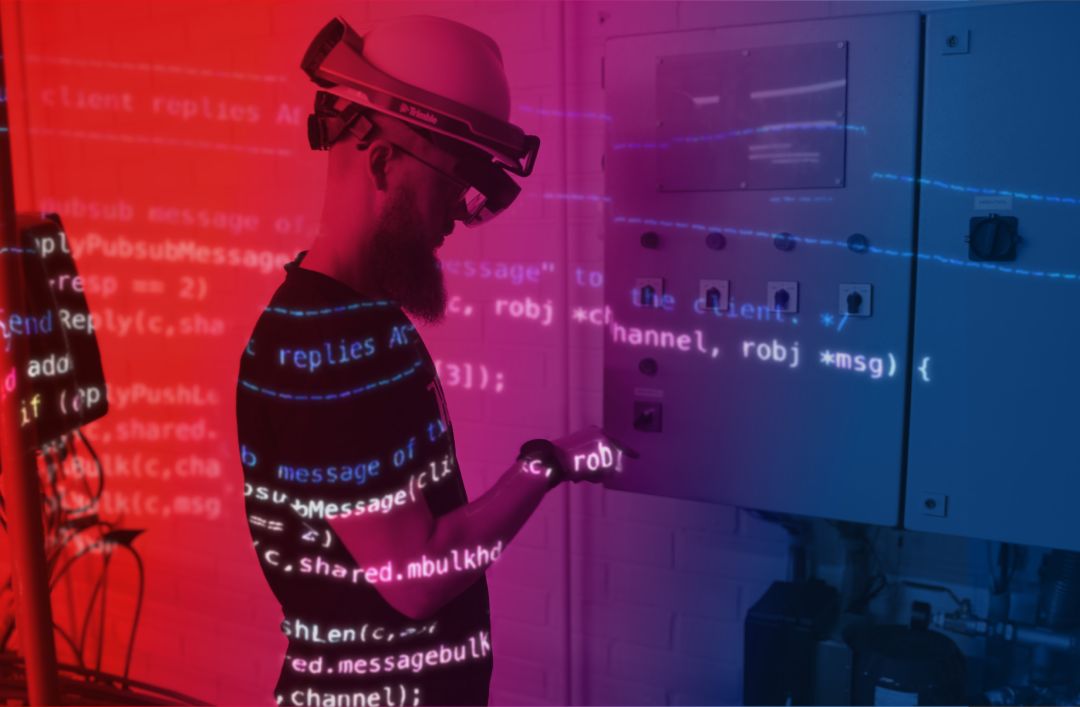
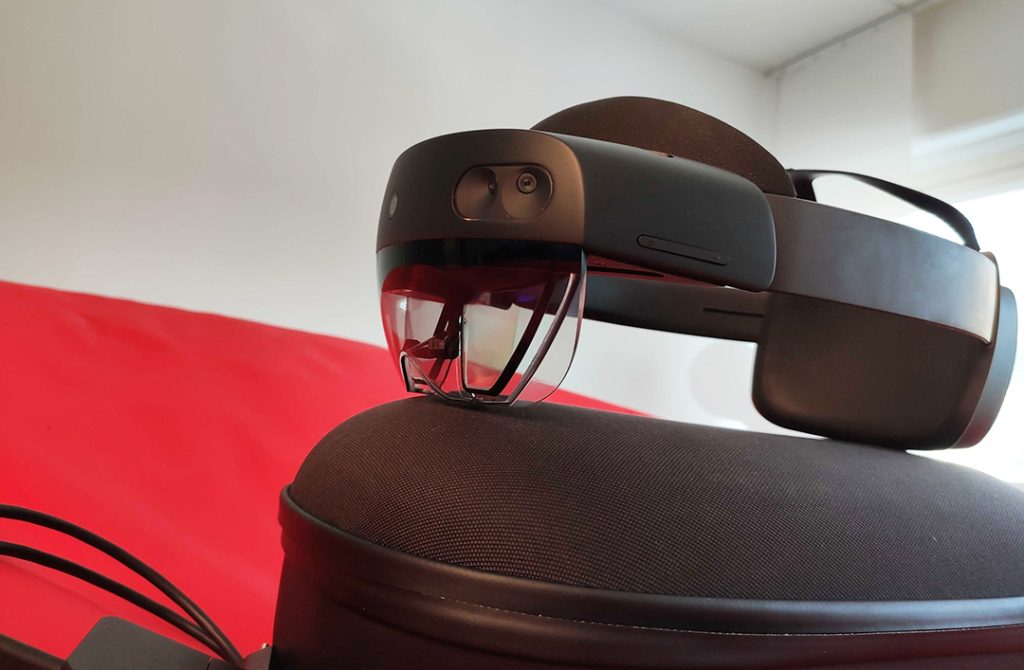
As part of the project, Hurja is developing an XR/AR application for HoloLens headsets (AR Crew Assistance Service, ARCAS). ARCAS is used in industrial environments, for example, to visualize operational and historical data, as well as maintenance information, for water pumps or meters at waterworks. The AR Crew Assistance Service enables easy access to data via HoloLens AR headsets.
Microsoft’s HoloLens headsets have been developed for mixed reality (MR) applications, although the term ‘augmented reality’ is also used in connection with HoloLens headsets as it is more widely established. Although ARCAS utilizes AR technology, the technology used therefore also falls under the concept of mixed reality (MR).
In practice, the difference between MR and AR lies in the scope of the user experience. In MR, virtual elements interact with real-world objects, whereas in AR the implementation may be less immersive. As an example of two-way interaction, an app can recognize a real-world object based on its 3D model and display instructions to the user relating specifically to that object. Both fall under the umbrella of the concept of Extended Reality (XR).
Key features of AR Crew Assistance Service
With ARCAS, for example, a consolidated view of real-time data can be obtained directly at the site requiring maintenance within a water utility’s production facilities. During maintenance, AR glasses can be used to view maintenance history, alerts and guides whilst the employee’s hands remain free to carry out maintenance tasks. The application can also be controlled using only eye movements and voice commands.
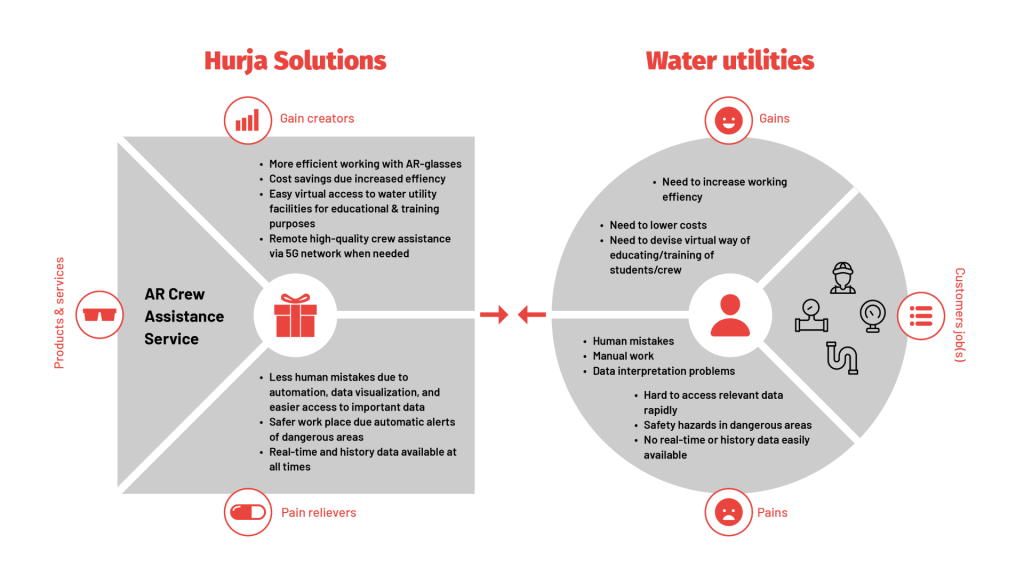
AR Crew Assistance Service also enables secure virtual access to production facilities for training purposes. ARCAS helps to improve efficiency, achieve cost savings and enhance health and safety at production facilities. ARCAS data is stored securely on servers located in Finland.
Location of the first pilot: Savonia WaterLab, Savilahti, Kuopio
Demo schedule for water utilities: Q1 2023, Savonia WaterLab
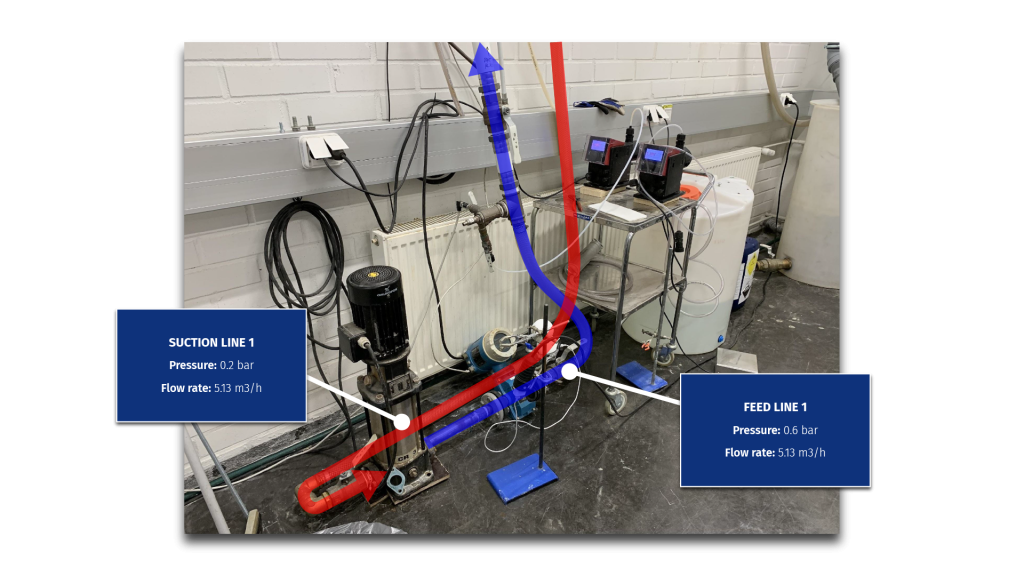
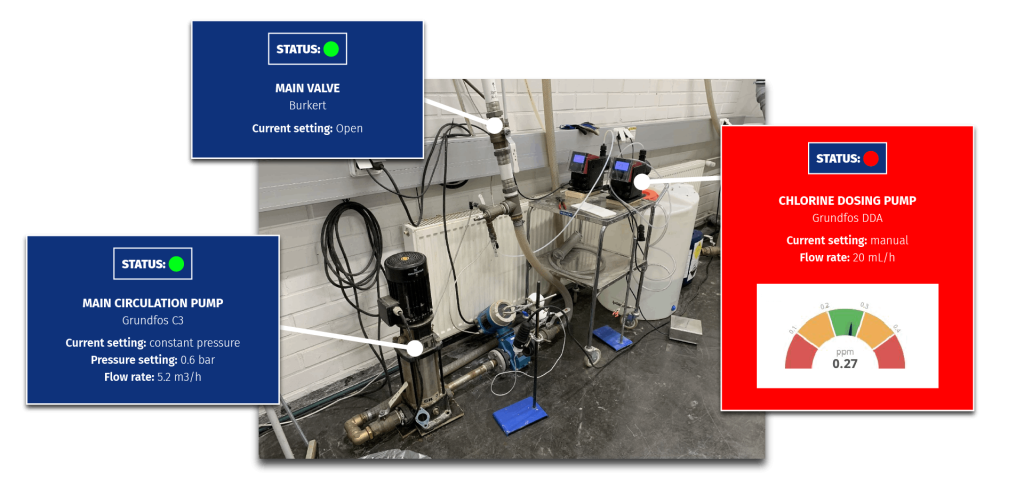
Features of the ARCAS interior demo:
- Virtual access to both real-time and historical data using advanced visualization, e.g. maintenance history, real-time data monitoring and equipment information.
- Pipe details and direction of flow.
- Visualization of hazard zones, such as impellers and electrical connections.
- Servicing and viewing servicing instructions on site.
- Improved efficiency and health and safety at work.
- Integration of information systems.
- Integration with existing infrastructure and systems.
For further information on the AR Crew Assistance Service (ARCAS) app and the Smart Water Infrastructure Management project: Project Manager, Dr Keijo Haataja (keijo.haataja@hurja.fi)
Digitalization brings opportunities
By making use of the new digital solutions enabled by digitalization, we can tackle common global challenges and create a genuine competitive advantage for individual companies as well. At present, very few organizations are making use of the potential of augmented reality (AR), for example, so there are excellent market opportunities for pioneers!
So please don’t hesitate to ask if you’d like to find out more about the various XR options – from WebAR and AR apps for mobile devices to more comprehensive solutions designed for AR glasses, such as HoloLens or Dynamics 365 Guides!
Shall we get started?
"*" indicates required fields

You might also like these articles
HoloLens 2 – AR glasses
Read more

Dynamics 365 Guides – guidance through mixed reality
Read more

6 winning use cases for AI – how to find where it really pays off
Read more

Smart remote management in industry – up to 30% savings on maintenance
Read more

AI Applications in Business in 2026: Off-the-shelf tools vs custom solutions
Read more
 How do we at Hurja create effective WordPress websites for businesses?