


How does UX affect the productivity of an online service?
In this blog post, we explain how an online service can be optimized by taking the end user’s needs into account through user experience (UX) methods. UX design is a process in which, through careful specification and, where appropriate, prototyping, a useful end result is created from the service user’s perspective.
The purpose of an online service, such as a website, is to work for the business 24/7. It should guide visitors to get in touch, make a purchase, make a booking or move on to the next step. Yet with many services, the situation is all too familiar: there are visitors, but the results fall short of expectations. The problem is not necessarily the amount of content or the technical implementation, but rather how the user experiences the service.
UX design, or user experience design, has a direct impact on how effortlessly a user can achieve their goal. When the user journey feels clear and intuitive, the service starts to deliver results. When users have to stop, think or guess, conversions fail to materialize.
- UX bridges the gap between the user and the business
- Usability is directly reflected in the results
- UI design brings UX thinking to life
- UX development is based on observations, not guesswork
- User experience has a direct impact on decision-making
- The interactivity and artificial intelligence of the online service generate interest
- When the UX is right, the online service does its job
UX bridges the gap between the user and the business
User experience refers to the emotional and cognitive responses associated with an online service or its functionalities. The concept is based on user-centred design, which specifically takes into account the needs and wishes of the client or end-user. In UX design, the user’s journey through the service is defined in detail, while taking into account, for example, typical human psychological behaviors and the objectives set for the company’s online service.
UX is therefore not just the attractive visual aspect of a user interface, but a more comprehensive concept that goes deeper than the surface. It is a way of looking at a web service from the user’s perspective and aligning this perspective with business objectives. Good UX guides the user forward naturally and makes it easy to select the right action. In everyday use, this means the service answers the user’s question before they have a chance to get frustrated. They understand where they are, what’s on offer and what they should do next. When the path is clear, the user moves forward. When the path is unclear, they leave.
At Hurja UX, we see UX first and foremost as a way of thinking. We do not design solutions in isolation from business objectives; instead, we always consider how a service should function and what kind of results it is expected to deliver.
Usability is directly reflected in the results
Usability is the foundation of the user experience, and its impact is quickly felt when it falls short. Products are left in the shopping cart without being purchased, users get lost on the website and cannot find the information they need, which also increases the workload on customer service through additional enquiries. Often, it is a matter of small details, but their impact on the productivity of an online service is significant.
Good usability does not require the user to learn how to use it. The service works exactly as the user expects it to, and the process flows smoothly without unnecessary interruptions. This builds trust and lowers the barrier to completing the task. When the user understands where they are and what will happen next, they feel confident to take action.
Subtle interaction, clear communication and well-judged micro-interactions support this experience when used thoughtfully. Seeking too much attention or aggressively pursuing conversions often has the opposite effect to that intended. In our view, every element must have a clear purpose: if it does not help the user or support the business objective, it is unnecessary.
UI design brings UX thinking to life
When the user experience has been thought through as a whole, UI design makes it visible and tangible. UI, or user interface design, is the visual and aesthetic aspect of UI/UX design – the part that the user sees and with which they interact directly.
Brand colours, typography, buttons, forms and the flow of the user interface all influence how clear and reliable the service feels. A good UI is not a separate layer, but rather supports the solutions created in the UX and subtly guides the user forward. When the UI and UX work together, the service looks good, feels natural and serves the business’s objectives.
UX development is based on observations, not guesswork
An effective user experience is not built on assumptions. By monitoring service usage and analyzing users’ actual behavior, it quickly becomes clear at which points the user journey slows down, breaks down or causes uncertainty. User data helps to identify the areas where development work should be focused, so that changes have a genuine impact.
This also makes UX development a form of decision-making that supports business operations. Rather than carrying out sweeping reforms based on gut feeling, development can be driven forward in a controlled and phased manner, focusing on those changes that improve the service’s functionality and support the objectives.
UX is therefore not a one-off project. Real value comes from continuous observation and improvement. User research helps to identify where friction arises in the user journey and which changes have the greatest impact on the end result.
We can also help with data collection and interpretation. For example, we use analytics tools such as Microsoft Clarity to reveal how the service is actually being used. Based on these findings, we identify key pain points and help translate them into concrete UX/UI improvements that make the service clearer and more user-friendly.
We view UX as part of a long-term development process. Small, well-timed improvements based on user data help the online service to evolve alongside the business and remain an effective tool over time.
User experience has a direct impact on decision-making
Decisions made on online services are often made quickly and with little deliberation. Users constantly evaluate the service based on how clear, reliable and hassle-free the experience feels. If the service causes uncertainty or requires too many pauses, decision-making slows down or comes to a complete halt.
A good user experience supports decision-making by removing friction. When a service operates consistently, provides clear feedback and guides the user forward without pressure, the user feels confident to take action. This translates into better conversion rates and smoother user journeys.
From a business perspective, it’s all about balance. The objectives of an online service are not achieved through aggressive guidance, but by creating an experience in which the user understands their situation and their options. When this is achieved, the online service not only looks good, but also supports the business in a sustainable way.
The interactivity and artificial intelligence of the online service generate interest
Good UX is created through a combination of usability and a clear visual identity. In addition to these, well-considered interactivity brings the service to life and helps the user understand that the service responds to their actions. Small micro-interactions, such as subtle animations and feedback on actions, support a smooth user journey and enhance the overall experience, particularly in mobile services.
When designing interactivity, it is important to take the user’s cognitive load into account. When interaction supports the user’s goal and is timed correctly, it makes using the service clearer and more enjoyable. In informative views, the role of interaction is often more subtle, whereas in guided stages it can help the user to progress.
In online services, chatbots and AI bots are common forms of interaction, offering users a quick way to find information, get answers and navigate the service. Artificial intelligence opens up new possibilities for interaction, but its benefits are only realised when it is designed as part of a seamless user experience.
Good UX lays the foundation for AI to support, rather than disrupt, user interactions. We develop AI bots that utilise a company’s own data in their responses, such as website content, documentation and other company-specific materials. When AI bots and other interactive features are designed as part of the user journey, they naturally support the user’s progress and help create an experience where assistance is readily available throughout the entire interaction.
When the UX is right, the online service does its job
A good user experience isn’t something the user notices as a separate thing – it simply feels as though everything works. From a business perspective, this means greater productivity, more relevant interactions and smoother customer service.
If a web service doesn’t currently seem to be doing what it’s supposed to, the reason often lies in the user experience. The user experience is usually finalised during a website or software project, but it can also be refined for existing products.
There’s usually always something that can be developed and improved. Conversion optimization, combined with refining the user experience, pays for itself through improved performance of the online service.
If you need help, we offer user experience design and service design alongside comprehensive web service and software projects. Get in touch!
Shall we get started?
"*" indicates required fields

You might also like these articles
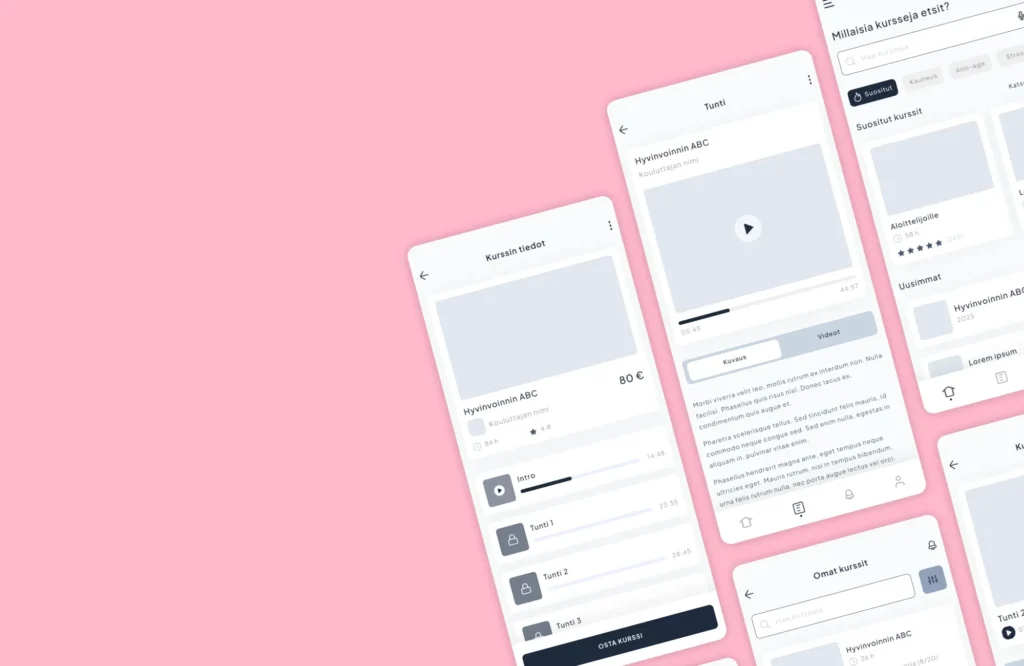
UX and UI design – what are they, and what role do they play in website and software projects?
Read more
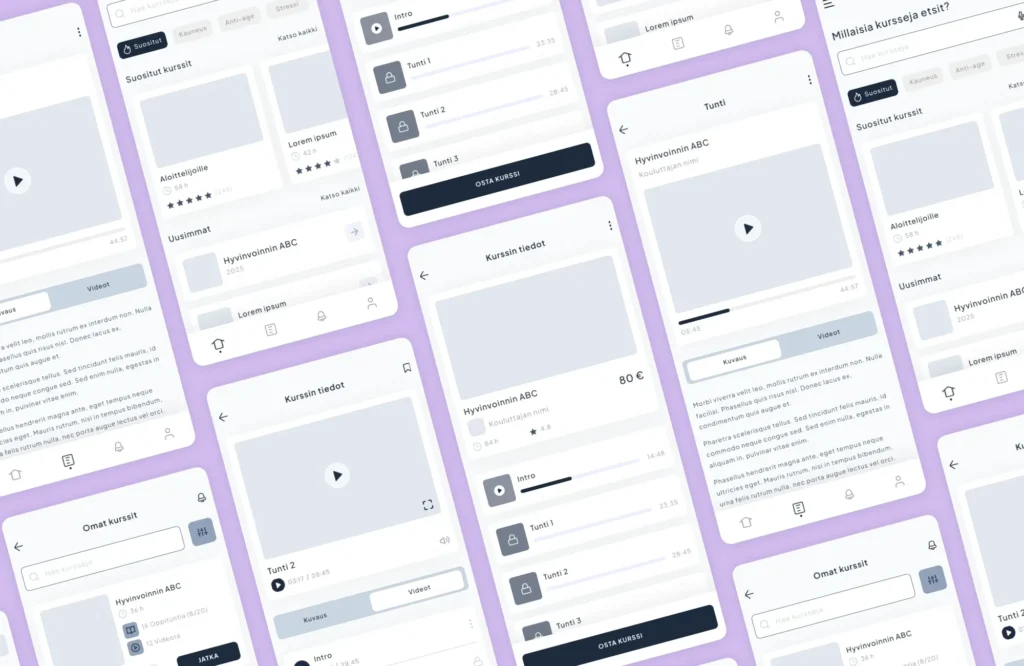
User interface design requires technical and visual expertise
Read more
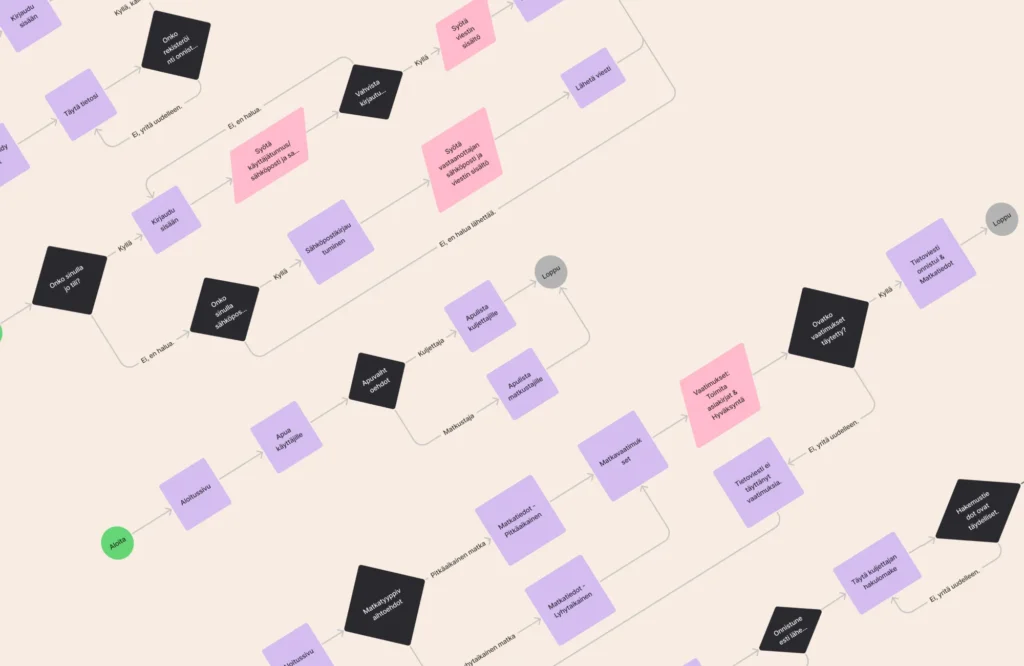
User journeys and AI – how to build a user-centric and intelligent service experience
Read more

6 winning use cases for AI – how to find where it really pays off
Read more
 React Native