


AI in software development: what speeds up and what stays with people?
Code that used to take days to write can now be produced in hours. That opens up the opportunity to achieve more with a smaller budget, as long as speed does not come at the expense of quality.
At Hurja, AI in software development is part of every project. Development work is assisted by AI agents, and this is reflected directly in the project’s price and schedule. The same technology also powers vibe coding tools such as Lovable, but professional development uses it differently.
Speed raises a fair question. If a system is completed faster than before, what has been sacrificed? In this article, we look at what coding agents actually do, how much they speed up the work and why the human role in a software project remains decisive.
- What does AI in software development mean in practice?
- What do coding agents do?
- How much does AI speed up software development?
- UI design speeds up, but people make the decisions
- People decide what gets built and are responsible for the result
- Every system is known by two people
- What does agent-assisted development mean for the client?
- Wondering what AI could speed up in your project?
- Frequently asked questions
What does AI in software development mean in practice?
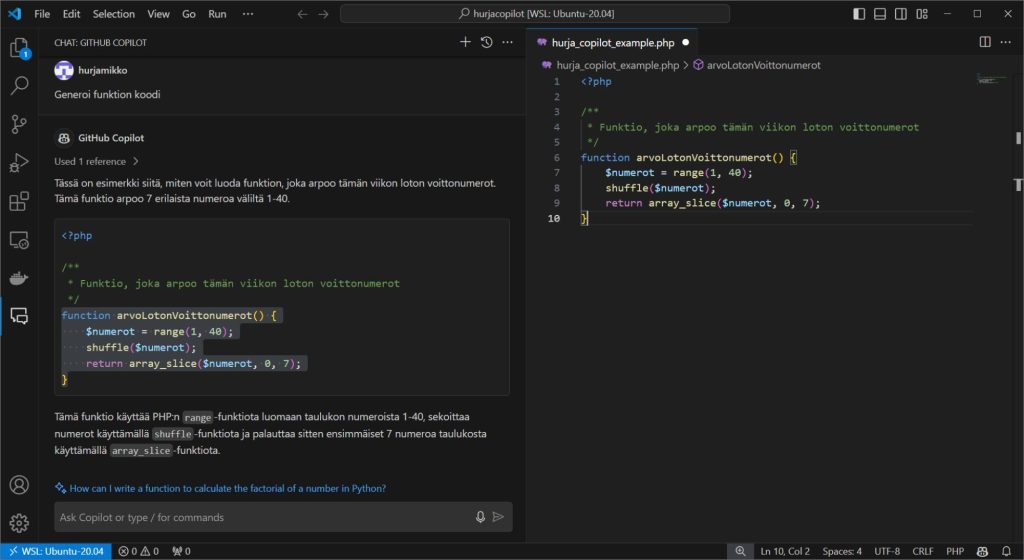
AI-assisted coding started with tools that suggested the next line of code to the developer. A coding agent goes further. It takes on an entire task, reads the existing codebase, makes changes across multiple files, runs the tests and fixes the errors it finds. Our tools include Claude Code and GitHub Copilot.
It is based on the same technology that powers AI agents in companies’ business processes. In software development, the agent works under a developer’s guidance in a codebase whose architecture, conventions and tests have been defined by people. The developer assigns the task, scopes it and reviews the result before anything moves forward. The more precisely the task is defined, the better the code the agent produces.
This is what sets professional development apart from vibe coding. In vibe coding, the same tool often produces an application without a defined architecture, code review or tests.
In Google’s DORA research (2025, around 5,000 respondents), AI accelerated software delivery, but without established practices, delivery stability declined. AI amplifies both the strengths and the weaknesses of a team’s ways of working.

What do coding agents do?
Agents are at their strongest in work that is repetitive by nature or where the outcome can be clearly defined. They typically do three kinds of work.
- They write routine code, such as data models, basic view structures and API calls.
- They write tests and run them every time the code changes.
- They make extensive but mechanical changes quickly, for example when a new field is added to every view.
Agents have also changed the early stages of a project. We can build a working prototype that the client can try out in a browser as early as the proposal stage. The client sees what the system looks like and how it works before making a decision, without having to evaluate a requirements list alone.
How much does AI speed up software development?
Agents speed up development work, meaning writing and testing code, by around 40 percent compared with fully manual development. At the level of the whole project, the savings are smaller, typically around one third, because some of the project work does not speed up at all.
For example, we recently estimated the first phase of a business system at around 655 hours of manual work and around 430 hours with agent-assisted development.
Project management routines, such as meeting notes, status updates and task lists, are now partly handled by AI. Decisions do not speed up at the same pace. Scoping, choices agreed with the client, reviews and coordination with other vendors still take human time.
If proposals differ widely, it is worth asking whether the estimate includes specification, code review, testing and maintenance. Producing code alone is fast, but a production-ready system also needs these stages.
Development continues. The tools are improving quickly, and the same working hour now produces clearly more finished functionality than just six months ago. This also changes collaboration models. In continuous development, a fixed monthly model can work better than a separate proposal and approval round for every small change.
UI design speeds up, but people make the decisions
User interface design can also speed up. How much depends on the project’s requirements. In simple user interfaces, not everything needs to be designed from scratch. Many views follow proven patterns, such as a list, a search field, filters and a form for adding and editing data. In views like these, AI quickly produces a first version based on ready-made components and established practices, and the designer focuses on reviewing and refining it.
Many business systems have several registers with a similar structure, such as customers, suppliers and equipment. Once the data model has been defined, AI creates consistent list and form views for all of them, fills them with realistic test data and checks that naming and buttons are consistent across every view. Work that used to take days is done in hours. The designer’s time shifts to the view that determines the system’s success. That could be, for example, a scheduling view where users plan the week’s work and respond to overlaps.
In core views like these, AI can produce alternatives, but decisions are made in discussion with the client. What the user sees first on the screen, how an error message is worded or which function belongs in the first phase are design decisions. The more demanding and distinctive the user interface, the larger the share of the design that is human work.
People decide what gets built and are responsible for the result
An AI agent does not decide what gets built, and it does not understand the client’s business. This work belongs to people, and it determines whether the project succeeds.
Specification and scoping. Deciding what will bring the client value fastest and what should be moved to a later phase is a human judgment. Good scoping often saves more than any tool. When writing code gets faster, the slowest stage is often the decision about what to build. That is why the client should have a named person who can make product decisions quickly.
UI and UX design. A system only succeeds if people want to use it. If, for example, the scheduling view feels clumsy, users will go back to Excel regardless of what else the system offers.
Architecture. People decide how the system is structured, where data is stored and how the solution will handle future integrations and a growing number of users.
Industry understanding. Behind the prototype is a person who has read the client’s description and compared it with similar previous projects.
Code review. Every change produced by an agent is reviewed by a human developer. Particular care is needed where an error shows up directly in the business, such as calculations, invoicing and access rights.
Responsibility. The client has a named project manager they can call. Their time goes less into reporting and more into scoping, priorities and supporting the client’s decisions. Reviews are held between people, and we are responsible for the result.
Every system is known by two people
In our Lovable article, we highlighted one risk of vibe coding. An application is often known only by the person who first built it. The same risk also exists in traditional software projects.
That is why our projects include a second developer from the first week, who reviews the code produced. The system’s technical solution is always known by two people, and a holiday, sick leave or change of personnel does not stop the work. Code review is part of our normal way of working, and it is always included in our estimate. The same team also continues after deployment, so the system is never handed over to strangers for maintenance.
What does agent-assisted development mean for the client?
Clients see agent-assisted software development in three ways. The price is lower than for a fully manual implementation. Delivery time is shorter. And the client can try out a working prototype before making a decision.
The quality of design, project management and responsibility for the result stay the same. When less time is spent writing code, more time is left for the things that determine the system’s value. These are the right scope, usability, architecture and quality assurance. AI speeds up writing code. People make sure the right thing is built and that it is built right.
Wondering what AI could speed up in your project?
Do you have a system whose development you have postponed because of budget? Or an idea you would like to see as a working prototype before making a decision? Tell us about your situation, and we will assess what agent-assisted development would mean for your project. Get in touch, we are happy to help.
Ready to get started?
"*" indicates required fields

Frequently asked questions
When AI is used in a controlled way, yes. At Hurja, a developer guides the agent and reviews every change, and a second developer knows the system from the first week. Key functions are tested automatically, and business logic and security are checked separately. We are always responsible for the result.
Writing and testing code becomes around 40 percent faster. At the level of the whole project, the savings are typically around one third, because specification, design of the core UI views and project decision-making still take human time.
Yes, but the tasks have changed. AI can handle some of the routines, such as meeting notes and status updates. The project manager makes sure the scope stays right, decisions are made on time and the client knows where things stand.
In both, AI writes the code. In vibe coding, an application is often created by prompting without a defined architecture, code review or tests. In agent-assisted software development, the developer scopes the tasks, the agent works in a codebase defined by people and every change is reviewed before it moves forward.
At Hurja, our tools include Claude Code and GitHub Copilot. The tool is chosen based on the task and the client’s environment, and the code is always stored in the client’s own version control.



 Website maintenance: what does it include and how much does it cost?